Photo Location · Beach
Matanzas Inlet, St. Augustine
Photography Guide
Photographer's guide to shooting at Matanzas.
About Matanzas Inlet
Matanzas Inlet sits at the southern tip of Anastasia Island, about 14 miles south of downtown St. Augustine, where the Matanzas River estuary cuts through the dunes and empties into the Atlantic. It's the stretch of coast just below the historic Fort Matanzas, and it's one of the more rugged, undeveloped beaches in the area — sweeping dunes, sea oats, tidal flats, and that dramatic spot where the river current meets the ocean. For an engagement, family, or maternity session it's a favorite when you want open, natural coastline with almost none of the buildings, crowds, or pier traffic you get closer to town. The land is part of Fort Matanzas National Monument (National Park Service), with the beach access walkovers maintained by St. Johns County.
Matanzas Inlet sits at the far south end of our photo locations guide coverage, with Crescent Beach the next stretch of sand heading back toward town.
Is There a Best Time to Photograph Matanzas Inlet?
Matanzas Inlet works in every season and at any hour, and we plan your session around your date and the tide.
- Sunrise Over the Inlet
- The ocean beach faces east, so the sun comes straight up over the Atlantic with the inlet, dunes, and sea oats lit in warm, low light, and you'll usually have the place almost to yourself at dawn. Unlike the nearby state and county parks with gated entries, the Matanzas Inlet beach lots don't have a gate, so sunrise sessions are easy to arrange here.
- Afternoon Along the Dunes
- Late-afternoon light skims the grasses along the dunes and the river side.
- Tides and Crowds
- Low tide exposes the wide flats and the sandbars at the inlet, so we check the tide chart for your date. Weekday mornings are quiet, and weekends and summer afternoons bring more beachgoers and anglers, which we plan around.
Photographer Tips at Matanzas Inlet
- Mind the inlet currents — safety first.
- Where the river meets the ocean, the current is strong and unpredictable, there are no lifeguards, and the bottom drops off fast. Keep couples and especially kids out of the moving inlet water; pose along the dry sand, dunes, and shallow tidal edges instead.
- Use the dunes and sea oats as a frame.
- Shoot low through the grasses to add foreground texture and a sense of wild, untouched coast.
- Backlight at sunrise.
- With the beach facing east, put your subjects between you and the rising sun for a warm rim of light; expose for their faces and let the sky glow.
- Work low tide.
- A receding tide opens up the flats, wet-sand reflections, and sandbars at the inlet for clean, mirror-like foregrounds.
- Keep horizons clean.
- One of this spot's strengths is the lack of buildings — frame toward open ocean and dunes to keep that uncluttered look.
What to Expect at Matanzas Inlet
- Who manages it
- The area is part of Fort Matanzas National Monument (National Park Service). The beach access boardwalks/ramps are maintained by St. Johns County.
- Access & parking
- Free parking in lots just north of the Matanzas Inlet bridge on A1A — a river-beach lot (about two dozen spaces) on the west/river side and an ocean-beach lot (about three dozen spaces) on the ocean side. The beach itself is open and ungated, so early-morning access is easy. Note: St. Johns County was repairing the beach walkover/ramp into spring 2026; if a walkover is roped off, check St. Johns County beach-access updates or look for the next open boardwalk before you plan around a specific entry.
- Photo permit
- The National Park Service does not require a permit for small, informal sessions — engagement, family, and portrait sessions with 8 or fewer people, hand-carried gear, and no exclusive use of an area typically qualify with no fee. Organized commercial shoots with crews, props, staging, or special equipment do need a permit ($200 application plus location fees). For a standard couple or family session, you're fine; if in doubt, contact the monument at (904) 471-0116.
- Amenities
- Minimal — this is a natural, undeveloped beach. Bring what you need; don't count on restrooms or concessions at the inlet itself.
- Crowds
- Quieter than the in-town beaches, especially on weekday mornings.
What to Bring
- A wide lens for the sweeping dunes-and-sky context, plus a longer lens to compress the grasses and inlet behind your subjects.
- Wardrobe: soft, coastal tones — cream, sand, dusty blue, warm neutrals — complement the dunes and water. Flowy fabrics catch the ocean breeze nicely. Avoid neon and busy patterns.
- Sun protection, water, and bug spray — the beach is exposed and the marsh edges can have mosquitoes at dawn and dusk.
- A towel and a change of footwear — expect soft sand and a walk from the lot over the boardwalk.
Nearby Alternatives
If you're already in this part of town, consider these other spots:
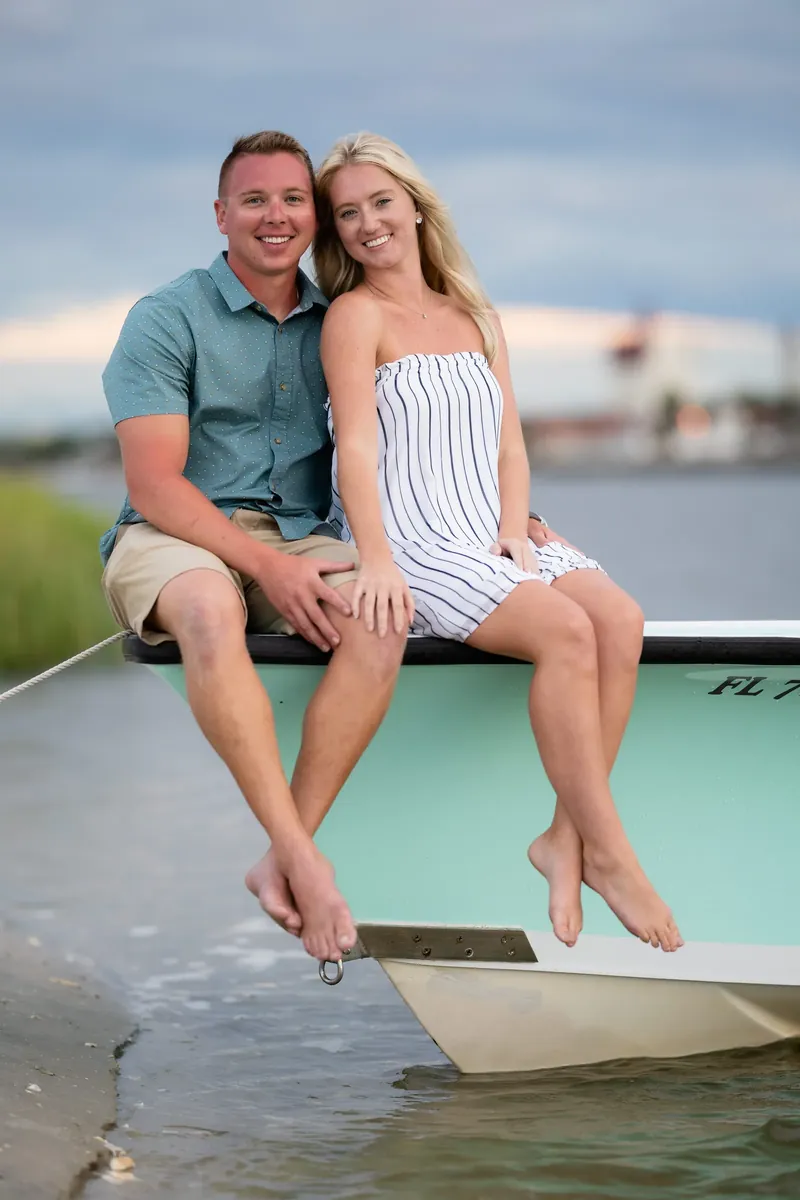
Sessions at Matanzas Inlet
Browse sessions we've photographed at this beautiful location

Location details verified
Want Photos at Matanzas Inlet?
We love photographing at this location and know all the best spots. Let's plan your session.
Get in Touch